The customer is waiting. The part has arrived. Then someone opens the box and finds cosmetic damage. Who can help the shop reach a workable solution without starting the entire order again?
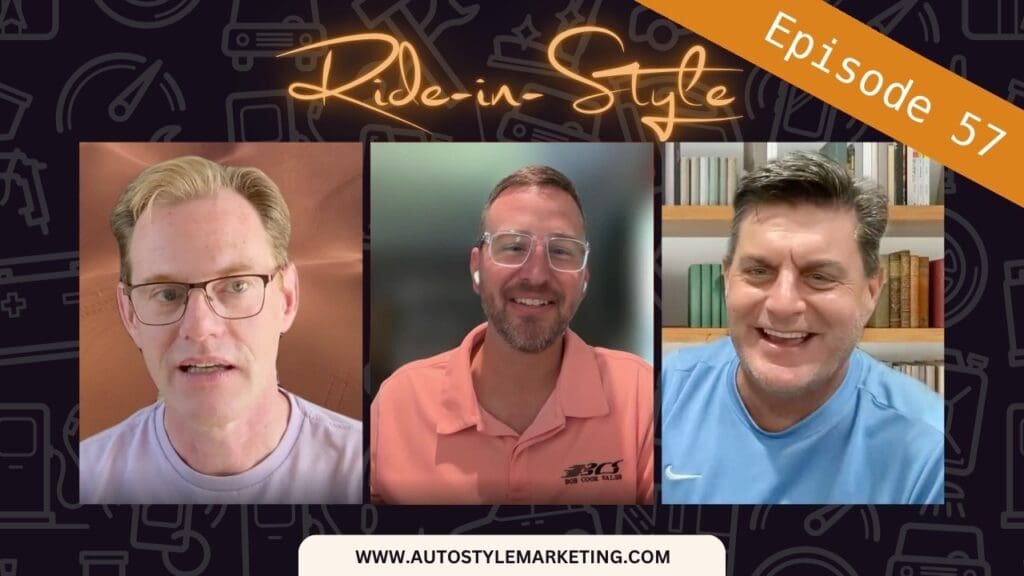
That is one of the situations Jonathan Barber describes in Episode 57 of the Ride-in-Style Podcast. Joining Jesse Stoddard and Josh Poulson, the Bob Cook Sales representative explains a role that is easy to misunderstand: the manufacturers' rep.
The conversation covers product education, distribution, freight costs, and the relationships that help manufacturers and restyling shops work together. It is a practical look at the people behind the product line.
What Does a Manufacturers' Rep Actually Do?
Jonathan describes a rep agency as an extension of a manufacturer's outside sales team. Instead of working as a direct employee of one manufacturer, the agency represents a group of product lines. Bob Cook Sales, he explains, avoids carrying lines that compete directly with one another.
For the manufacturer, the arrangement provides sales coverage through a commission-based relationship. For the shop, it creates a contact who may understand several of the brands it sells and installs.
Josh points out the value of that continuity. Rather than building a separate relationship with a new person for every product line, a shop can work with a rep who already knows its business.
Product Education Is Part of the Job
Jonathan explains the connection among the manufacturer, the warehouse distributor, and the shop that sells or installs the product. A warehouse distributor, often shortened to WD, stocks products and supplies resellers.
The rep helps create demand through that system. That means visiting shops, understanding their work, and explaining products: what is new, which features matter, where the product fits, and how the shop can obtain it.
For a busy restyler, the useful question is not just, "What do you sell?" It is, "What would fit the customers and jobs we already serve?" A good product conversation should help the shop make a better decision, not simply add another item to the catalog.
Buying Direct Is Not Automatically the Better Deal
Jonathan and Josh spend time on a familiar decision: buy directly from the manufacturer or order through a distributor?
The answer depends on more than the price of the part. Freight, delivery speed, inventory requirements, and the customer's schedule all affect the outcome. A direct order can look attractive until shipping consumes the margin or a delayed arrival disrupts the installation.
Josh explains why that matters in restyling. A shop doesn't know every vehicle and product request that will come through the door. Keeping everything in stock isn't realistic, and a dealership customer may not be able to wait through a lengthy order-and-shipping cycle.
Jonathan doesn't prescribe one purchasing route for every job. His advice is to consider the options and make the call when a specific need falls outside the distributor's usual stock.
A Problem-Solver When the Order Goes Wrong
The damaged-product example shows what that relationship can look like in practice. Jonathan describes a restyler who received a product with a cosmetic issue while the customer was ready for the installation.
In this particular case, the customer was comfortable keeping it with a discount. Jonathan coordinated with the manufacturer on a credit, allowing the parties to resolve the issue without shipping the product back and forth.
The important detail is the customer's agreement. This is not a recommendation to install damaged products or assume every issue is cosmetic. It is an example of a rep helping the shop, supplier, and customer reach an acceptable resolution to a specific problem.
Sometimes a Sales Problem Starts with the Business Model
On the manufacturer side, Jonathan says a stalled sales effort can require consulting before it requires more selling.
A product that works financially when sold directly to consumers may not leave enough margin for a distributor and reseller. Entering wholesale distribution can mean revisiting costs, pricing, and whether the market has room for the product in the first place.
Jonathan is frank that those conversations do not always end with a recommendation to expand. Sometimes an opportunity is too crowded or the economics do not work.
For shop owners considering a new line, the parallel is straightforward: make sure the product makes sense inside your business, including the work and costs around it. A promising sales pitch is not the same as a workable margin.
Learning Both Sides of the Industry
Jonathan's involvement in SEMA began with volunteering and later led him to PRO. He values the chance to learn directly from shop owners and understand problems he would not otherwise see.
Jesse describes the rep's role as an interpreter between the two sides. That captures the theme of the episode: useful relationships carry information in both directions. Shops need to understand products, and manufacturers need to understand what shops and their customers actually need.
Jonathan also sees more opportunities ahead in software, services, and consulting. He presents that as his outlook for the rep business, not a prediction that physical products will disappear.
Watch the Full Conversation
Watch Episode 57 for Jonathan's full explanation of the manufacturers' rep role and his examples of solving real distribution and shop problems. Visit Bob Cook Sales to learn more or connect with Jonathan. For more conversations about the business of restyling, browse the Ride-in-Style podcast library.