
Keeping a family business alive can take so much attention that planning its future gets pushed aside. Clayton Tomasino knows that pressure firsthand. Looking back, one of the things he would change is not how hard he worked, but how early he gave himself permission to aim bigger.
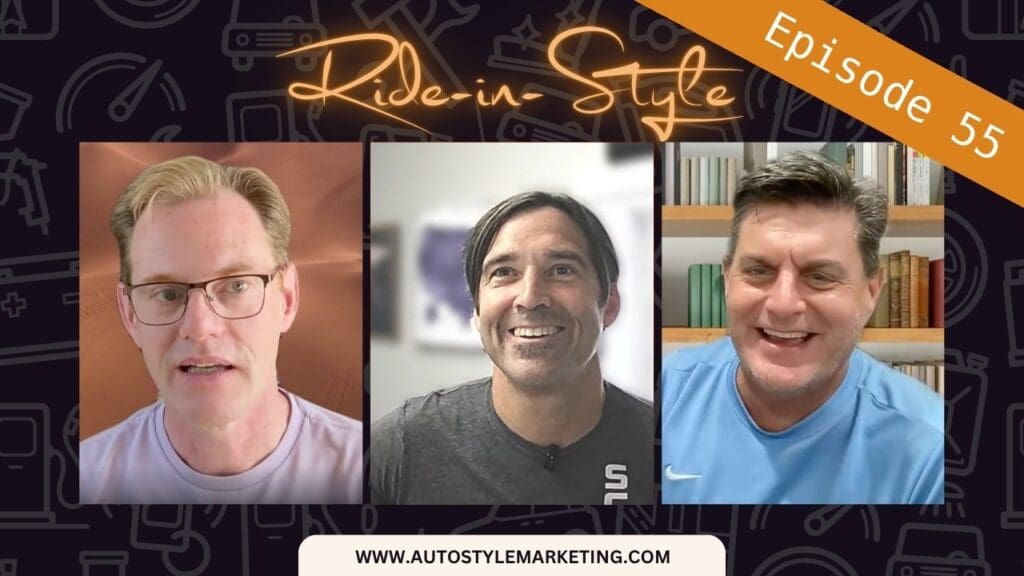
In Episode 55 of the Ride-in-Style Podcast, Clayton joins Jesse Stoddard and Josh Poulson to share the story of Scorpion Coatings. The conversation moves from a coating formula developed in an Indiana barn to window film, software, and the challenge of matching growth with the right people and resources.
A Family Business Built Around a Practical Problem
Clayton says his father started Scorpion in 1996 after working in asbestos removal, where applying coatings was already part of the job. He was interested in the bedliner market, but the cost of equipment made entry difficult.
Instead of accepting that barrier, he worked on his own formulation. That practical focus still runs through Clayton's description of the business: how can a product work for the dealer or installer, not just the company selling it?
Clayton didn't originally plan to join the family operation. He was working in finance and accounting in Hawaii when the opportunity came to return to Indiana as Scorpion's CFO in 2007. What sounded like a change in location and career soon became a much bigger responsibility.
Growth Didn't Remove the Pressure
Clayton credits customer conversations, packaging changes, and early digital marketing with helping the business grow. But the recession tested the company and his confidence as a young financial leader.
He recalls feeling responsible for keeping family members and employees paid while trying to manage a business through a difficult period. His account is candid, not a polished story where every decision worked.
For shop owners, the distinction matters. Winning more business and building a resilient operation are connected, but they aren't the same task. Growth still needs cash, people, and a realistic understanding of what the business can handle.
Adding Products, Then Choosing What to Keep
Scorpion's move into window film started with its existing customers. The company was already selling bedliner products to businesses such as dealerships and body shops. Clayton and the team asked what other add-on services might fit those relationships.
They explored several categories, including paintless dent repair and windshield repair, before deciding that window film was the strongest fit for Scorpion. Clayton is careful to make a distinction: the other categories weren't bad businesses. They simply weren't the right opportunities for his company.
He also clarifies that Scorpion wholesales window film rather than manufacturing it. That matters when describing how the business expanded.
The useful lesson is not to copy Scorpion's product mix. It's to test an expansion against your own customers, resources, and results. Adding a service is only half the decision. Knowing when to stop putting time into a poor fit is the other half.
Think Beyond the Next Payroll
Asked about his biggest challenge, Clayton returns to people and resources. Growing the business means deciding where to put both, and those decisions don't always line up neatly.
He also reflects on how the pressure of keeping the company going shaped his thinking. For too long, he says, survival took priority over a larger, clearly defined direction. His advice is to put the bigger goal in writing earlier, even if reaching it takes longer than expected.
That doesn't make the daily work less important. It gives the daily decisions something to support. For a restyling business, that might mean deciding which services to strengthen, what the next hire needs to make possible, or which investments belong in the next stage rather than this month.
Technology That Starts with an Installer's Problem
Clayton describes Scorpion Scan as a mobile-based tool for window-tint and paint-protection-film patterns, with a workflow that sends patterns from a phone to a plotter. He connects the software's development to a problem customers were facing: bringing new people into shops and helping them become productive.
The emphasis is on making work easier to learn and perform, not adding technology for its own sake. That's a useful filter for any new shop tool. What task does it improve? Who will use it? What training will still be needed?
He also discusses smart-film projects and his interest in bringing film and technology together. Those parts of the interview describe development work and future possibilities, not a promise that every idea is a finished product ready for installation.
Watch the Full Conversation
Watch Episode 55 for Clayton's full account of Scorpion's evolution, the lessons behind its expansion, and his advice on setting a bigger direction for a business. Visit Scorpion to explore its products and confirm current software features and terms. For more industry conversations, browse the Ride-in-Style podcast library.
This conversation was recorded in August 2026. Product details, software pricing, and offers mentioned in the video reflect the recording date; confirm current information directly with Scorpion.