A restyling shop can build a vehicle for one customer who wants something different. A vehicle manufacturer has to work within a much larger production system. Those two perspectives don't always line up, but Steve Gilmore sees plenty they can learn from each other.
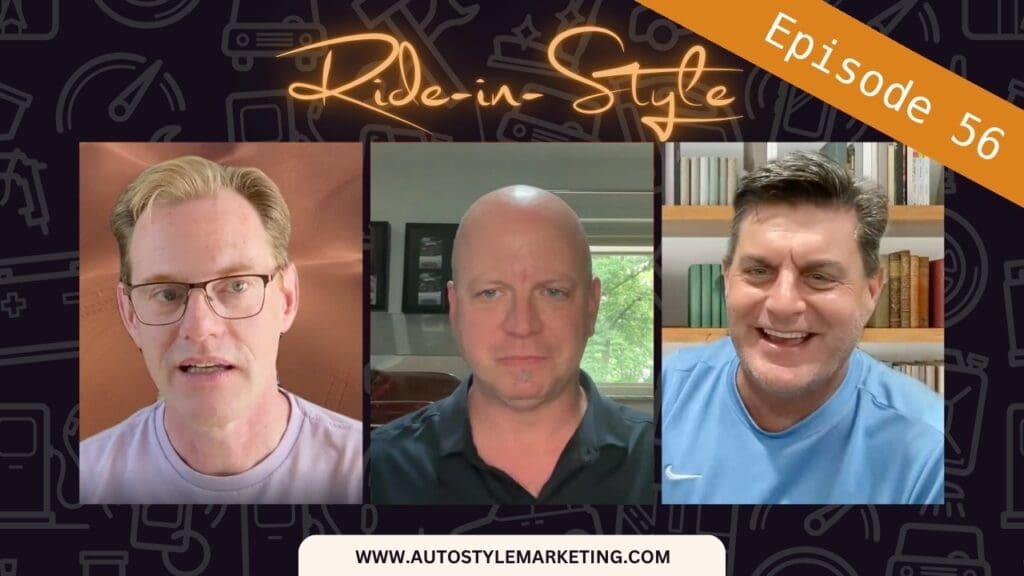
In Episode 56 of the Ride-in-Style Podcast, Ford Customization's chief designer joins Jesse Stoddard and Josh Poulson to talk about his path into automotive design, the value of aftermarket feedback, and the thinking behind Ford Custom Garage. They also discuss AI-assisted design and why getting students involved matters to the industry's future.
From Drawing Cars to Designing Them
Steve grew up in southeast Ohio with an interest in cars and a habit of drawing them. An automotive magazine helped him connect that interest to a possible career.
A Hot Rod article about the Cadzilla project introduced him to the idea that someone could make a living designing vehicles like the ones he loved. He also gained practical experience with vinyl graphics and lettering before building his career at Ford.
His move into customization and accessories in 2018 brought that work closer to a longstanding interest: helping people make a vehicle their own. The path wasn't simply about finding a job at an automaker. It was about moving toward the kind of work he wanted to do.
Building Trust Between the Manufacturer and the Shop
Steve and Josh acknowledge that an automaker's representative isn't automatically welcomed into every aftermarket conversation. Restylers may wonder whether sharing an idea will help them or create more competition.
Steve's approach is to start as an automotive enthusiast and industry participant, not just a representative of his employer. He describes asking how new vehicles can better accommodate the accessories people will want to install.
That includes considering provisions for aftermarket parts while a vehicle is still being developed. From a shop's perspective, the value is practical: somebody inside the manufacturer is asking questions about what happens after the vehicle leaves the factory.
Steve also recognizes that independent shops have flexibility a large manufacturer doesn't. A shop can try an idea on one vehicle for one customer. Ford has different requirements and a much longer path from an idea to a production package.
Personalization Starts with a Specific Customer
That difference is part of what Steve finds interesting about the aftermarket. A design doesn't have to appeal to everyone to mean a great deal to the person who requested it.
He describes Ford Custom Garage as a way to explore smaller-run, more focused ideas. Rather than aiming every package at the broadest possible audience, the team can consider a particular interest, region, or design direction.
For restylers, that reinforces an existing advantage: knowing the individual customer. A package becomes more useful when it starts with how that person wants the vehicle to look, feel, or function, rather than a list of whatever accessories happen to be available.
Why Desert Rising Is More Than a Color Trend
The Bronco Desert Rising discussion shows how Steve's team turns inspiration into a coherent design. Yes, they pay attention to trends. But he explains that the colors were grounded in desert landscapes and dry lake environments, not chosen simply because pink was getting attention.
The goal was to connect the appearance to the places and experiences associated with the vehicle.
That's a useful question for any appearance package: do the pieces belong together? Color, graphics, wheels, and accessories should tell the same story. A strong concept gives customers a reason to want the complete package, not just notice one unusual part.
Using AI Without Handing Over Design Judgment
Steve gives a concrete example of AI in his team's workflow. A designer begins with a wheel sketch, uses a tool to generate variations, then adjusts the direction. He also describes moving quickly from a concept to a rough 3D model for visualization.
In his view, the opportunity is speed. The designer still has to decide what works, what needs changing, and whether the result fits the original intent. He draws a distinction between getting an idea in front of people and solving the harder engineering work behind a usable product.
For shops exploring similar tools, that's a sensible boundary. A convincing image can help explain an idea. It isn't proof of fitment, manufacturability, or installation readiness.
Giving the Next Generation a Place to Start
Steve also talks about plans to bring students into hands-on work connected with SEMA. What excites him is more than having students at a trade show: his team was helping with their class during the semester as well.
That connects back to his own story. Exposure to the work can help someone recognize a path they didn't know existed. For an industry that depends on practical skill and enthusiasm, giving younger people a chance to see and participate in the work is part of building its future.
Watch the Full Conversation
Watch Episode 56 for Steve's perspective on Ford Customization, aftermarket collaboration, and the tools changing automotive design. Explore Ford Custom Garage for current package information, or browse the Ride-in-Style podcast library for more conversations with industry guests.
This conversation was recorded in September 2026. Event plans and product references in the video reflect that recording date.